

Letting the Image Emerge
It is all there — you just need to find it.
A long time ago, when I was about twenty, my friend and I took a sculpting workshop. The teacher told us that the figure was already inside the stone — you only needed to find it and set it free. He was paraphrasing a famous artist, but I can’t recall who. Rodin, maybe? (I’ll look it up.)
My friend and I set our statues free and had a great time doing it.
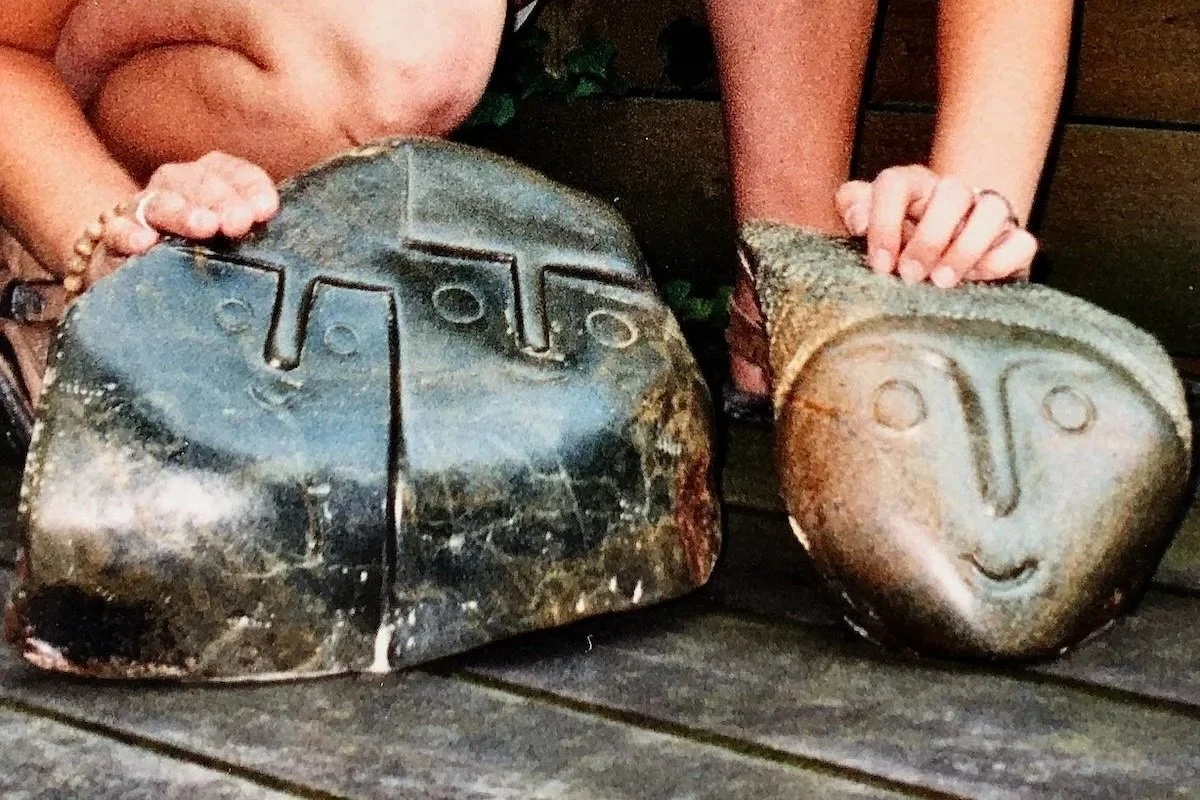
I think my love for playing with ink blots and working on top of collaged, randomly painted papers or boards comes from that experience. The image is already there; you only have to find it and let it emerge.
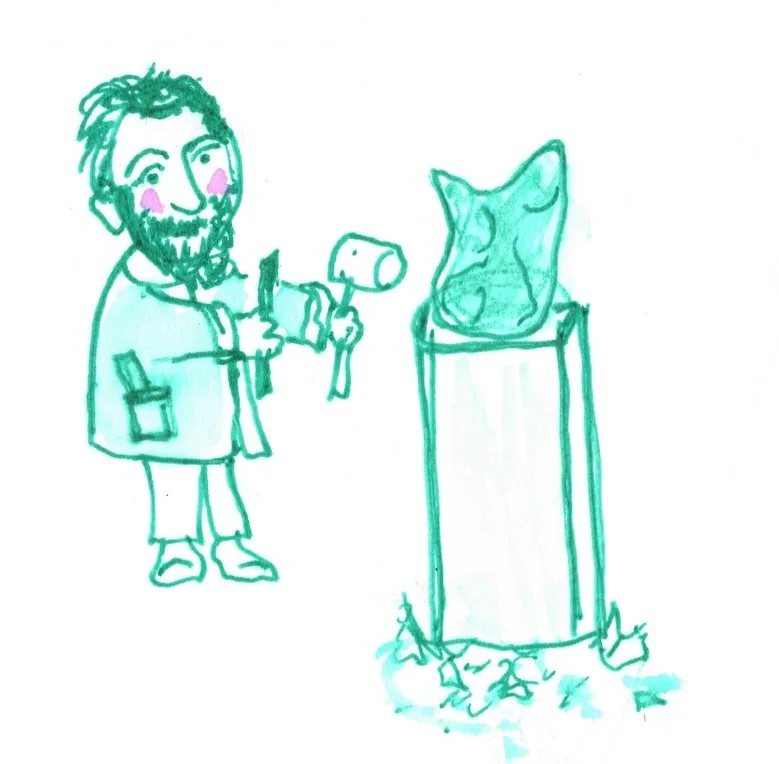
Obviously, I had to check which artist he was referring to. I asked ChatGPT, and nope — it wasn’t Rodin. The quote is actually attributed to Michelangelo. It goes:
“I saw the angel in the marble and carved until I set him free.”
Of course I couldn’t stop there — always double-check and dive deeper. Many artists, particularly Renaissance artists like Michelangelo, Leonardo da Vinci, and even William Shakespeare, were inspired by this idea. Salvador Dalí is a more recent example of an artist who embraced the phenomenon.
Although the concept has existed for a long time, the English word for it has only been around since 1962: pareidolia, which is — quoting the Merriam-Webster Dictionary — “the tendency to perceive a specific, often meaningful image in a random or ambiguous visual pattern.” Seeing faces, animals, or objects in clouds is a well-known example. The term comes from the German word Pareidolie, first used by a psychiatrist named Kahlbaum in 1866.
It’s a fascinating concept — and a very useful tool for artists.
Do you use it ?
— Marianne H
